
Deciding between paid vs unpaid internships is one of the more confusing choices freshers face early in their job search. It’s tempting to assume paid is always better and unpaid should be avoided entirely, but the reality is more nuanced — the right choice often depends on the specific opportunity, not just whether a stipend is attached to it.
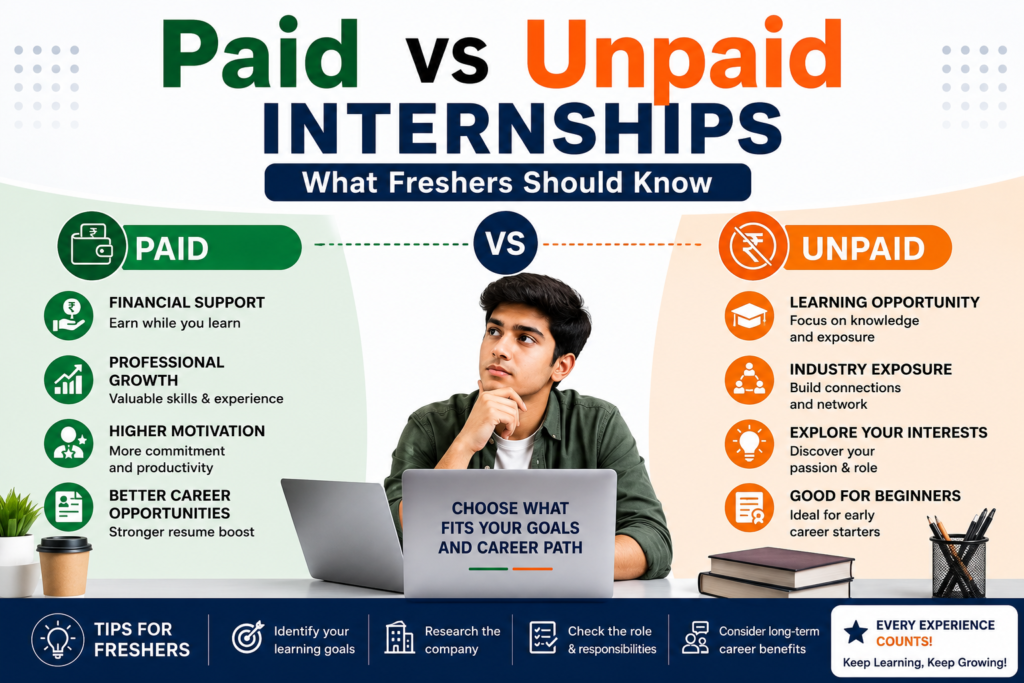
This guide breaks down the real differences between paid and unpaid internships, when each makes sense, the red flags to watch for in either case, and how to evaluate an offer beyond just the stipend amount.
Table of Contents
What Counts as a Paid vs Unpaid Internship
A paid internship offers a fixed stipend, typically monthly, in exchange for your work during the internship period. The amount can vary widely depending on the company, industry, location, and whether the role is remote or on-site.
An unpaid internship offers no direct financial compensation but may still provide other forms of value — a certificate of completion, mentorship, a strong reference, or, in some cases, a stepping stone toward a paid role or full-time offer at the same organization.
Some internships also fall into a middle category, offering a small allowance to cover expenses like transport or internet costs, without being a full “paid” stipend in the traditional sense.
Pros and Cons of Paid Internships
Pros
- Provides financial support during your internship period, reducing dependence on savings or family support
- Often signals a more structured, established internship program, since organizations that formally budget for interns tend to have clearer processes
- Can indicate the organization values the intern’s contribution as genuine work, not just a learning favor
Cons
- Paid internships are often more competitive, with a larger applicant pool per opening
- Some paid internships, especially at larger companies, may have narrower eligibility criteria (specific degree, percentage cutoff, or graduation year)
- A higher stipend doesn’t always correlate with better learning value — some poorly structured paid internships still offer limited genuine experience
Pros and Cons of Unpaid Internships
Pros
- Often easier to secure, especially at smaller companies, startups, and NGOs, making them a good option when you’re just starting your search
- Can offer more hands-on, varied responsibilities at smaller organizations where interns take on real work rather than isolated tasks
- Useful for exploring a new field or industry before committing to it as a paid, full-time path
Cons
- No financial support, which can be a genuine constraint depending on your circumstances and location
- Some unpaid internships lack structure or mentorship, offering limited actual learning value
- Occasionally used by less scrupulous organizations to get free labor without providing meaningful experience in return
When an Unpaid Internship Is Worth Considering
An unpaid internship can still be a smart choice in several situations:
- You’re just starting out and need your first piece of real experience to strengthen future applications
- The role offers genuine hands-on responsibility, not just observation or busywork
- It’s with an organization or team you specifically want exposure to, even if the immediate opportunity isn’t financially compensated
- A certificate or strong reference is explicitly offered, adding concrete value to your resume afterward
- The time commitment is manageable alongside your studies or other responsibilities, without financial strain
The key factor isn’t whether it’s paid, but whether it offers genuine, verifiable experience and a clear learning outcome.
When You Should Be Cautious
On the other hand, be more cautious about an unpaid internship when:
- The role description is vague about actual responsibilities or learning outcomes
- The organization has a pattern of hiring “interns” repeatedly instead of paid staff for ongoing, essential work
- There’s no mentorship, feedback, or structure — you’re expected to figure things out entirely on your own with no support
- The time commitment is full-time or demanding enough to significantly interfere with your studies or other paid work
- No certificate, reference, or documented experience is offered at the end
In these cases, the “opportunity” may cost you more in time than it gives back in genuine career value.
Red Flags to Watch For
Regardless of whether an internship is paid or unpaid, watch for these warning signs before accepting:
- Asking you to pay a fee to “secure” the internship. Legitimate internships never require payment from the candidate.
- Extremely vague job descriptions. If the company can’t clearly explain what you’ll actually be doing, that’s a sign the role itself may not be well thought out.
- No official communication channel. Legitimate internships come with a proper company email, structured offer letter, or clear onboarding process — be cautious of internships offered entirely through informal chat messages with no documentation.
- Pressure to decide immediately. Genuine opportunities typically allow at least a few days to consider an offer.
- No online presence or verifiable company information. A quick search should show some legitimate trace of the company — a website, LinkedIn page, or verifiable reviews.
Questions to Ask Before Accepting Any Internship
Before accepting either a paid or unpaid internship, it’s worth asking:
- What will my day-to-day responsibilities actually look like?
- Will I receive a certificate of completion, and what will it state?
- Who will I be reporting to, and will there be regular feedback or mentorship?
- What is the expected duration, and is there flexibility if my availability changes?
- Is there a possibility of a stipend increase, extension, or a full-time offer based on performance?
Asking these questions upfront, ideally over email so you have it in writing, helps set clear expectations and avoids misunderstandings later.
Common Mistakes to Avoid
- Dismissing all unpaid internships outright. This can mean missing genuinely valuable early-career opportunities, especially at smaller organizations.
- Accepting any paid internship without checking the actual role. A stipend alone doesn’t guarantee meaningful experience — some paid roles still involve minimal real responsibility.
- Not asking about a certificate or documentation upfront. Assuming you’ll automatically receive proof of your internship, only to find out later that none is provided.
- Ignoring the time commitment relative to your other responsibilities. Overcommitting to an internship, paid or unpaid, that conflicts significantly with your academic schedule can hurt both.
- Not researching the company at all before accepting. Even a brief search can reveal red flags or confirm legitimacy before you commit your time.
Expert Tips for Evaluating an Offer
- Weigh learning value over stipend amount, especially early in your career — a lower-paid or unpaid role with genuine hands-on work often builds a stronger resume than a higher-paid but passive one.
- Ask current or former interns about their experience, if you can find them on LinkedIn, since firsthand accounts are often more revealing than the official job description.
- Get any offer details in writing, even a simple confirmation email outlining role, duration, and stipend (if applicable), to avoid confusion later.
- Consider a mix of both over time. An unpaid internship early on to build initial experience, followed by paid opportunities once your resume has some relevant experience, is a common and reasonable path.
- Don’t be afraid to negotiate small asks, even in unpaid roles — requesting a completion certificate, a LinkedIn recommendation, or a reference letter afterward is a reasonable expectation to raise upfront.
Frequently Asked Questions
1. Are unpaid internships worth doing as a fresher? Yes, in many cases, especially if the role offers genuine hands-on experience, mentorship, and a certificate or reference afterward. The key is evaluating the actual learning value, not just the absence of a stipend.
2. Is it legal for companies to offer unpaid internships? In most cases, yes, as long as the arrangement is genuinely educational and both parties agree to the terms. However, requirements can vary, so it’s worth understanding local norms if you have specific concerns.
3. How do I know if an unpaid internship is legitimate? Check for a proper company website, verifiable online presence, clear communication through official channels, and a written offer outlining your role and duration.
4. Should I always choose a paid internship over an unpaid one? Not necessarily. If the paid option offers limited real experience while the unpaid option offers substantial hands-on work and mentorship, the unpaid role may actually be more valuable for your resume and skill development.
5. Can an unpaid internship turn into a paid position? Yes, this happens fairly often, especially at smaller companies and startups that use internships as an informal trial period before offering a paid role or full-time position.
6. What should I ask for if an internship is unpaid? At minimum, ask for a certificate of completion and, if appropriate, a reference or LinkedIn recommendation afterward, so you have something concrete to show for the experience.
7. How long do internships typically last? Duration varies widely, from a few weeks for short-term programs to several months for more structured internships, depending on the organization and the nature of the role.
8. Is it normal for internships to not offer any stipend at all? Yes, particularly at smaller companies, startups, and non-profits, unpaid internships remain fairly common, especially for a candidate’s very first internship experience.
9. What’s a reasonable stipend range for a fresher internship? This varies significantly by location, industry, and company size, so it’s more useful to compare offers within your specific field and city rather than relying on a single benchmark figure.
10. Should I mention an unpaid internship on my resume the same way as a paid one? Yes. What matters most to future employers is the experience, responsibilities, and skills gained — not whether the internship was compensated.
Conclusion
The paid versus unpaid decision shouldn’t be the only factor driving your internship choices as a fresher. A well-structured unpaid internship with genuine responsibility and mentorship can often be more valuable than a passive, poorly structured paid one. Focus on the actual learning value, ask the right questions upfront, and watch for red flags regardless of whether compensation is involved.
Ready to start evaluating opportunities for yourself? Check out the latest internship openings for freshers on FreshersDrives.com and compare what’s available right now.